
Introduction
Freelancing has become one of the best ways to earn money online in 2026. Thanks to the internet, anyone with a valuable skill and a reliable connection can work with clients from anywhere in the world. The best part? You don’t need years of experience to get started.
Many successful freelancers started with no professional background, no portfolio, and no clients. They learned valuable skills, built their confidence, and gradually grew their businesses.
If you’re wondering how to start freelancing with no experience, this guide will walk you through the essential steps to begin your freelancing journey.
1. Understand What Freelancing Is
Freelancing means working independently instead of being employed by one company. Freelancers offer their services to different clients and are usually paid per project, per hour, or through long-term contracts.
Popular freelancing services include:
- Content writing
- Graphic design
- Video editing
- Web development
- Digital marketing
- Virtual assistance
- Translation
- Data entry
- Social media management
- AI prompt writing
Freelancing gives you flexibility, allows you to work from home, and lets you choose the projects you enjoy.
Keyword: Freelancing for beginners, online freelancing, work from home
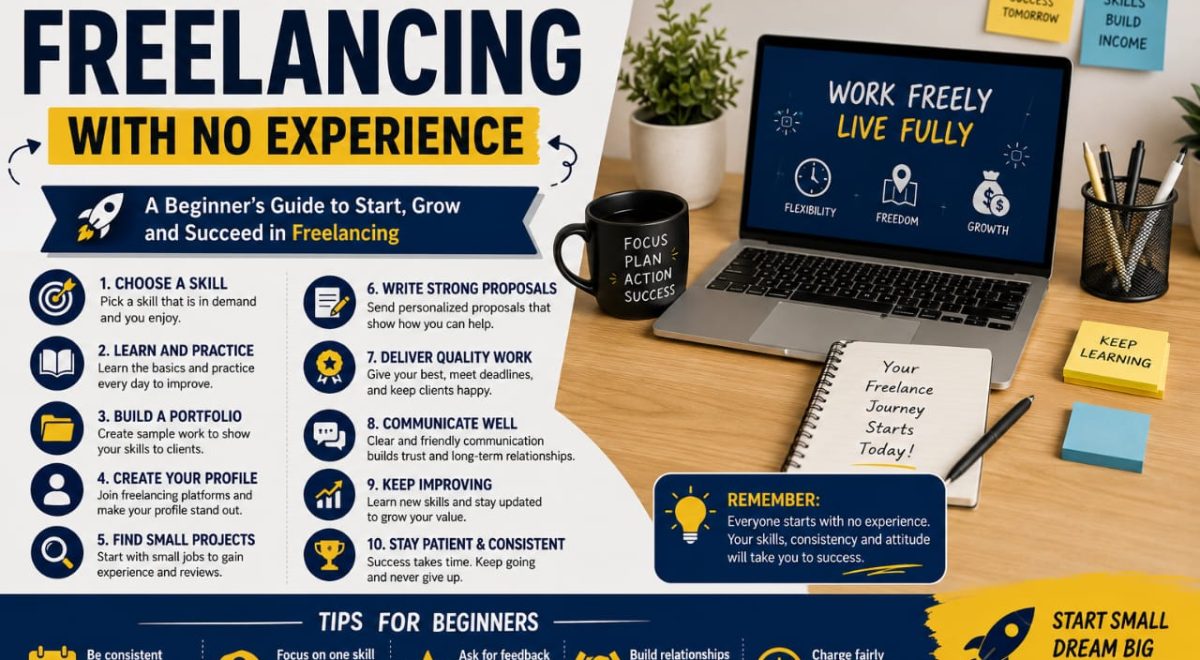
2. Choose One Skill to Focus On
One of the biggest mistakes beginners make is trying to learn everything at once.
Instead, choose one skill and become good at it.
Some beginner-friendly freelance skills include:
- Copywriting
- Canva design
- Video editing
- WordPress management
- SEO writing
- Customer support
- AI content creation
- Data entry
- Email marketing
- Virtual assistance
Spend time learning your chosen skill through free courses, tutorials, articles, and regular practice.
Keyword: Freelance skills, beginner freelance jobs, online skills
3. Learn Every Day
You don’t need a university degree to become a freelancer, but you do need knowledge.
Dedicate at least one hour each day to learning and practicing.
You can learn from:
- YouTube tutorials
- Online blogs
- Free online courses
- Industry newsletters
- AI learning tools
- Practice projects
Consistency matters more than perfection.
The more you practice, the more confident you become.
4. Build a Simple Portfolio
Clients want proof that you can do the work.
If you don’t have real clients yet, create sample projects.
For example:
- Writers can publish blog articles.
- Designers can create logos and social media graphics.
- Video editors can edit sample videos.
- Website developers can build demo websites.
- Social media managers can design sample content calendars.
A portfolio demonstrates your skills even if you have never worked with a paying client.
Keyword: Freelance portfolio, portfolio for beginners
5. Create Professional Profiles
Join trusted freelancing platforms and complete your profile carefully.
Include:
- A professional photo
- A clear headline
- A short introduction
- Your skills
- Portfolio samples
- Contact information
A complete profile increases your chances of attracting clients.
Popular freelancing platforms include Upwork, Fiverr, Freelancer, PeoplePerHour, and Contra.
Keyword: Freelance profile, freelancing websites
6. Start with Small Projects
Don’t wait for high-paying jobs immediately.
Your first goal is to gain experience and collect positive reviews.
Small projects help you:
- Build confidence
- Improve communication
- Understand client expectations
- Grow your portfolio
- Earn testimonials
Every successful freelancer started somewhere.
7. Write Strong Proposals
A proposal is your first impression.
Avoid sending the same message to every client.
Instead:
- Address the client’s problem.
- Explain how you can help.
- Mention relevant skills.
- Keep the proposal short.
- End with a polite call to action.
Clients appreciate personalized proposals because they show genuine interest.
Keyword: Freelance proposals, winning freelance jobs
8. Deliver High-Quality Work
Quality is your biggest marketing tool.
Always:
- Meet deadlines.
- Communicate clearly.
- Follow instructions carefully.
- Check your work before submitting.
- Be professional and respectful.
Happy clients often return with more work and recommend you to others.
Positive reviews help build trust and grow your freelancing career.
9. Keep Improving Your Skills
The freelancing industry changes quickly.
Technology, AI tools, and client expectations continue to evolve.
Successful freelancers never stop learning.
Improve your knowledge by:
- Reading industry blogs
- Following experts
- Taking online courses
- Practicing regularly
- Learning new AI tools
- Staying updated with market trends
Continuous learning helps you remain competitive.
10. Stay Patient and Consistent
Many beginners quit too early because they don’t find clients immediately.
Freelancing is a long-term journey.
You may send dozens of proposals before getting your first project.
That’s completely normal.
Keep improving your skills, updating your portfolio, and applying consistently.
Persistence often separates successful freelancers from those who give up.
Common Mistakes Beginners Should Avoid
When starting your freelancing career, avoid these common mistakes:
- Trying to learn too many skills at once.
- Copying proposal templates without personalization.
- Ignoring communication with clients.
- Missing deadlines.
- Charging extremely low prices for long periods.
- Stopping after receiving a few rejections.
- Failing to update your portfolio.
Learning from these mistakes will help you grow faster.
Benefits of Freelancing
Freelancing offers many advantages, including:
- Flexible working hours
- Work from anywhere
- Unlimited earning potential
- Opportunity to work with international clients
- Better work-life balance
- Continuous skill development
- Greater independence
With dedication and consistent effort, freelancing can become a full-time career or an additional source of income.
Final Thoughts
Starting freelancing with no experience may seem challenging, but it is absolutely possible. Every successful freelancer was once a beginner who had no clients, no reviews, and no professional portfolio.
The key is to choose one valuable skill, practice consistently, create a strong portfolio, and remain patient throughout the process.
Focus on delivering quality work, learning continuously, and building long-term relationships with clients. As your experience grows, so will your confidence, reputation, and income.
Freelancing is not about becoming successful overnight. It is about making steady progress every day. If you stay committed to learning and improving, you can build a rewarding freelance career in 2026 and beyond.